

People outside Japan might already be familiar with Floresta donuts through Instagram posts of cute, animal-shaped donuts. But what makes Floresta really interesting (besides making delicious donuts) is their business philosophy.
Ethical donuts
It’s a national chain with locations all around Japan. This chain started out in 2002 in Nara. Originally called Maeda Donuts, it’s gone through a variety of name changes. According to their website, they try to decrease their environmental impact by decreasing their packaging. This packaging philosophy feels sort of rebellious in Japan, where over-wrapping/packaging is an issue* and choosing to work with environmentally friendly products in their store.
Not so sweet
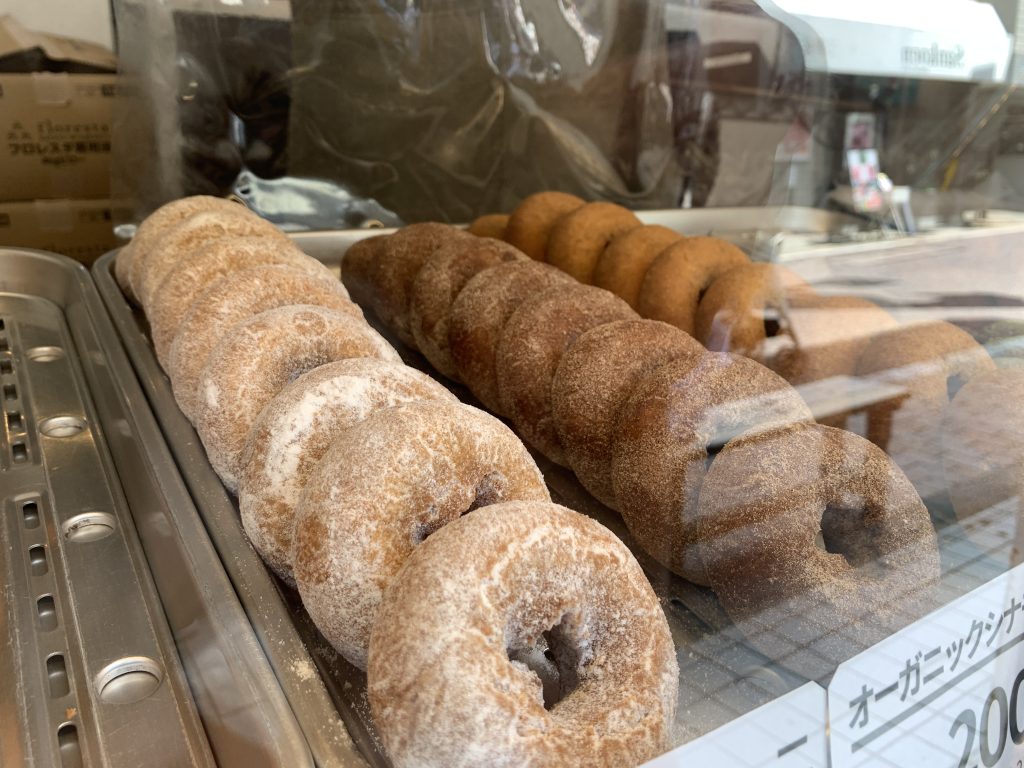
One of the defining features of Floresta donuts is that they aren’t so sweet and they are quite dense. They’re more like variations of an old-fashioned type of cake donut. This reflects their commitment to ethical practices and sourcing domestically. It’s not the same kind of sugar bomb as a Krispy Kreme. Don’t get me wrong, I love the sugar bomb, but options make everything taste better.
Cute donuts

Let’s get to the main point: cute donuts. Sure, you can get your traditional donut shapes, or donuts holes on a stick (this sentence only makes sense in the world of donuts). The donuts are classic cake-style donuts (which I prefer). They source many products domestically and avoid preservatives and even have vegan options. But the driving force of my journey to Floresta? Those cute animal-shaped donuts.
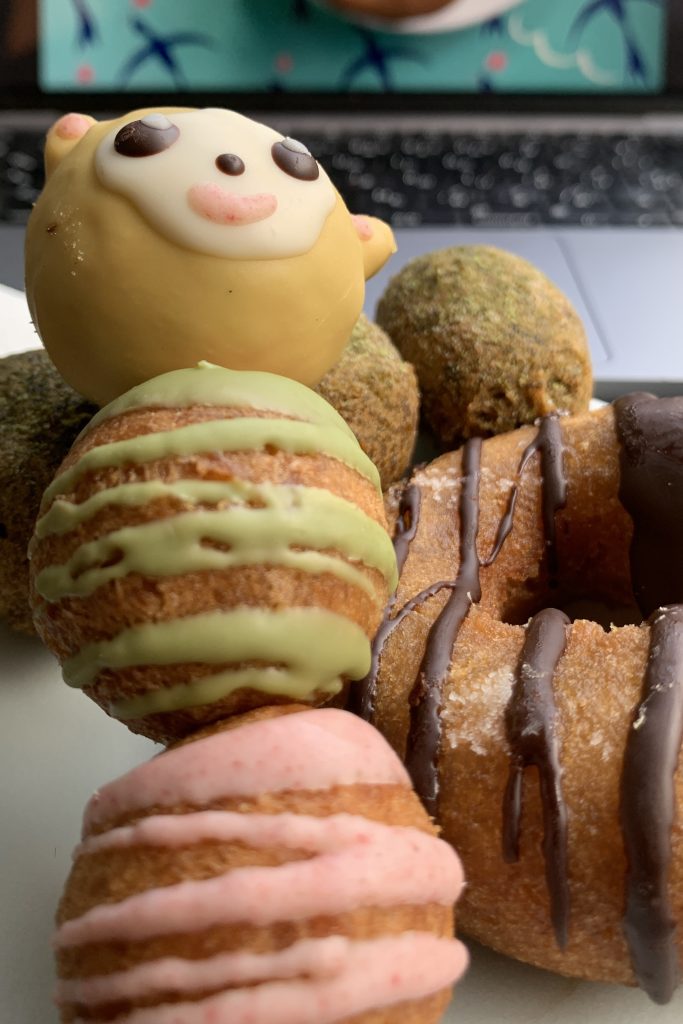
Check out this mitarashi dango-style donut holes on a stick. Mitarashi dango is a traditional Japanese mochi where three balls are on a skewer. (And this feels redundant, but I thought mitarashi dango was worth a bit of explanation because I love that donutty nod to Japanese tradition).
Donut shops past
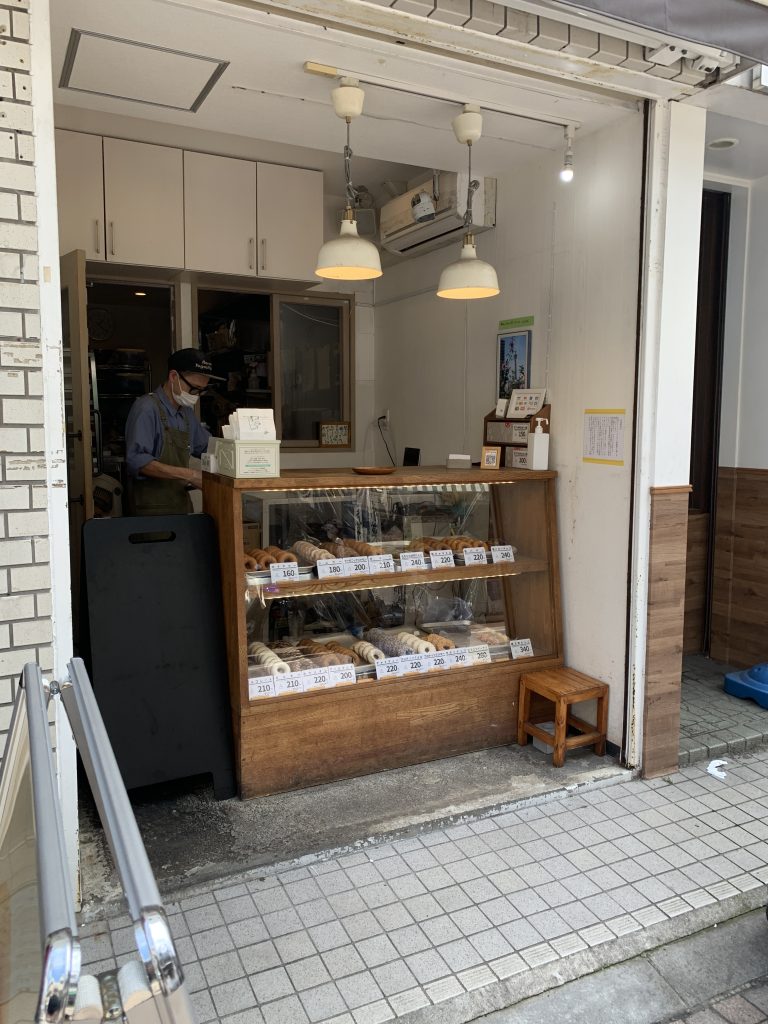
The Togoshi Ginza branch was takeout only, so they didn’t have the Instagram-famous animal shapes when i went (in 2023).
If you found this article through my Tokyo Donut Files Index, you may remember when I wrote that shops come and go.
Sadly, this applies to my local Floresta in Togoshi Ginza. It’s been closed since April 2025 (though a note said there were plans to reopen at an undetermined date. I’ll have to journey there to update). There were also branches in Soshigaya-Okura Station and Kamakura that closed in January 2024.
Koenji has the good stuff
Occasionally, you’ll find Floresta donuts at a pop-up shop outside a train station or a grocery store. But if you really want Floresta donuts, you need to go to the store. Currently, the only Floresta in Kanto is in Koenji. Last I heard, the Koenji branch had an eat-in section and more animal-shaped donuts. Shops in other parts of Japan are still in operation as well as their online shopping site.
Book inspo
Floresta in Togoshi Ginza represented a great day out as I wandered down the shoten gai (shopping street) and browsed the different shops and picked up a donut to go. It has a very local vibe rather than a major tourist hot spot. It was a place where I enjoyed feeling part of the neighborhood though I live several stations away.
Another rough thing for the area was the rain squall we had last fall (September 2025). The sewers got overwhelmed and ended up flooding many areas and affected a lot of shops. The shopping street is fairly vibrant, and I hope something fun replaced these donuts and the stores recovered from the damage. I foresee a trip to Togoshi Ginza in my future to check it out.
When creating Joe’s Donut House for my series, I saw it as a port in a storm, where people could hang out in rough weather. I wanted a place that felt safe physically but also providing comfort with sweet donuts, good coffee and community coming together. While the Togoshi Ginza location was basically a take-out only place, the flood really made me think about how much I craved comfort spaces.
Floresta Details
Address: 3-34-1 Koenji Kita, Suginami-ku, Tokyo 166-0002, Japan (Koshin-dori Shopping Street, 6 min from Koenji station)
Nearest station: Koenji
Website: https://www.floresta-doughnuts.jp/shop/
Instagram: https://www.instagram.com/floresta_doughnuts/
*A note about the over-wrapping/packaging
In a world where we’re trying to cut down on plastic waste, the individually wrapped food items in a bag within a bag within a box style packaging can feel overwhelming. I think it comes from two places. The first is keeping food from going stale in a humid environment. While the overpackaging used to bother me more, keeping the food in the state it’s meant to be eaten prevents food waste. Keeping your nori crispy and fresh instead of sticky, sad and wilted is considered good customer service which is also very important here.

1 comment